
We only judge parents who can’t fight back
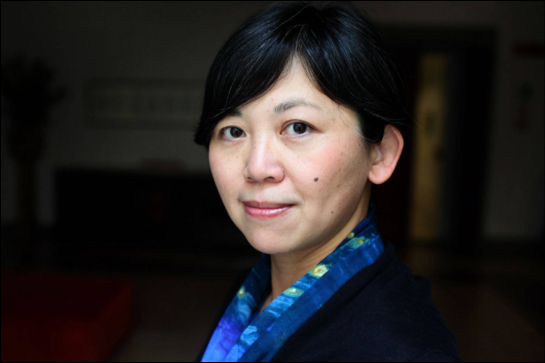
Yiyun Li’s older son, Vincent, killed himself in 2017. He was sixteen. She wrote a book about him. Her younger son, James, killed himself in 2024. He was nineteen. She wrote a book about him too, and that one won this year’s Pulitzer Prize.
Between the two deaths were six years, and Li has described them herself: James was lonely for all six of those years, she said, with a loneliness no mother could do anything about. Vincent had been nearly the only person James talked to. After Vincent died, James mostly stopped talking. When James was six he told her he suffered from monophobia, an extreme fear of loneliness; he had looked the word up so he could describe himself to her accurately. And for the six years after his brother died, James didn’t cut his hair. He grew it the way Vincent wore his.
She also tells us what she did during those years: “I did not stop writing or take time off from teaching.”
People read that sentence as resilience. But it’s neglect, because there was a child in the house. And when that child killed himself too, the most educated people in America gave the book about him their biggest prize. And even now, Princeton presents Li to students as a mentor.
We have a whole vocabulary for bad mothers and we use it every day. A poor mother who leaves her kid unsupervised gets a caseworker in her kitchen, a court date, mandatory parenting classes. Ruby Franke put her kids on YouTube and people spent years calling her a bad mother, and when one of her children escaped through a window, malnourished, she went to prison. Nobody said “parenting is complicated” or “we shouldn’t judge.”
We are happy to judge parents, but we means-test the judgment. Poor parents can’t get government services without being judged. Middle-class parents can’t put their kids on the internet without being judged. Above a certain income, judgment becomes structurally impossible, because every adult positioned to judge the parent is either paid by the parent or outranked by her.
When I wrote about what women in high-paying jobs actually do about childcare, I said the president of Cloudflare has a stay-at-home husband. Her PR firm contacted me to say I needed to fact-check: her husband is a startup CEO. I asked: if that’s the case, who takes care of the children? No reply. Poor parents get caseworkers. Rich parents get publicists.
A poor family in crisis triggers mandatory reporters — schools, clinics, caseworkers. Strangers are entitled to ask what is happening inside the house. A rich kid who stops talking is surrounded by mandatory reporters — school, psychiatrist, coach — but all of them answer to the parent. The parents gain privacy, and it’s the kid who pays for it.
Li taught at Princeton. Vincent went to Princeton High School. James died there as a freshman. No family was surrounded by more people trained to recognize risk. And the family’s risk wasn’t even private. Li had already published a book about her two suicide attempts, back when her sons were young. What the people around her did with it was treat her continued productivity as evidence she was coping.
Where was the father? He was there for all six years too. Somewhere in those six years, someone should have said: James is the emergency now. He needs to be somebody’s entire job. There were two parents in that house and two full-time careers. Nobody said that to either of them.
Ok, back to the prize. I believe Li’s books are great, but that makes it worse. Because when it comes to judging parents, the better the writer, the bigger the exemption. And it’s why our award system is rotten: prizes can only measure output, and nobody can win one for stopping.
I know because I stopped. My kids demanded final approval of what I write about them, and the years right after that were the least productive of my twenty years of writing. I had to rebuild how I write, and why I write, which meant failing in public. There is no award for the book you don’t write because your kid said no.
We absolve every accomplished parent with one of three sentences. Susan Wojcicki ran YouTube and her husband was a director at Google; after their son Marco died of an overdose at Berkeley, his sister said his friends knew far more about his addiction than his family did. We didn’t know. Patrick Radden Keefe tells the story of Zac Brettler, who accumulated a chauffeured limo with unexplained money, and an invented identity in front of his parents before he turned up dead at nineteen. We didn’t understand. Toni and Allen Plante’s daughter Ana was “really afraid to be away from us” in kindergarten; her parents decided she was shy and kept working. After Ana started trying to kill herself, then came psychiatrists, hospitalization, medication, locked knives. She died at fifteen. We did everything.
We didn’t know. We didn’t understand. We did everything. Those three sentences answer the same question: when the parents found out.
A kid in crisis finally puts a spotlight on the parents, and the parents start behaving — that’s what the psychiatrists and the locked knives are. We did everything is true about the year under the spotlight and says nothing about the twelve years before it.
Suicide prevention is staying home with a five-year-old who is terrified to be away from you. Parents and kids need to practice their connection, and establish that it’s always there. You build that connection with time and energy. The exact same thing a career requires.
A child is not somebody’s primary responsibility when the child has to compete with two careers for time and energy. Somebody has to choose the kid. Educated women already know this, which is why they’re more likely to assign primary caregiving to themselves or marry a full-time caregiver. Parents who spend their kids’ childhoods on their own self-actualization raise kids who do the same thing to their kids — it runs in generations.
A two-year-old who cries learns that trouble is something you take to whoever picks him up. If that’s you, he becomes a six-year-old who tells you a kid hit him, a twelve-year-old who tells you he’s lonely, a sixteen-year-old who tells you he wants to die. You can’t build that when your kid starts talking about dying. So beware of saying I didn’t know. It’s an assessment of your parenting, and it’s not good.
Don’t tell me it’s cruel to judge a grieving mother. Grief doesn’t retroactively make the parenting good. We refused to judge her, so nobody protected James.
We have mandatory reporters because otherwise people look away. But most bad parenting never reaches the threshold that forces somebody to report it. Everybody just watches.
Think of the family you know where something is wrong. The kid who is lonely, terrified, disappearing, using drugs, begging not to go to school. Did you tell the parents they were the problem? Or did you help them keep believing they were doing everything they could?
The people around Yiyun Li helped her keep believing.
We should all be mandatory protectors of children.
From my experience, the kids who aren’t exposed to mandatory reporters at all are kids who are homeschooled. For some families, parents are the problem because they are present. In a 2 parent household, an abusive parent is enabled by a negligent parent who will say: “I didn’t know”. No shit you didn’t know, you chose not to.
This is probably true. And I’ve seen a lot of self-righteous neglect among homeschoolers. That said, I was a homeschooler and people called CPS on me in three states. I didn’t mind. I saw it as caring — someone cared enough to make sure my kids were okay.
I regret I can’t offer any science.
Part of the reason I relate to women’s liberation movement and their “consciousness raising” is that, although I’m not a woman myself, I have tried to understand messages from not just my culture but my family and parents. One day sitting in my college counsellor’s office she pointed out, “It would be natural for you to see parents (in general) as the enemy.” And indeed, I did not associate with college kids who still lived at home. (Yes, I was messed up)
I don’t remember if I went through a strident phase. I still believe that families are a “system” and that a child needs to leave to get better. Which I did, and when I felt sad about that, I told myself that at least I wasn’t getting any worse.
Later I have been more charitable due to “twin studies” where long lost twins meet, after years apart, and find that genetics have made them similar. So maybe children can’t blame parents as much as one might think. I was advising my young bank teller that if she didn’t stop habitually wrinkling her forehead she would end up wearing a patch at night. Turns out her mother did. (My further advice was that actors can make smooth foreheads a learned skill, and I knew of a tennis player that did so to look different in competition)
That’s the most I can offer today.
I love those twin studies. However neglect changes the usefulness of twin data. Neglect is abuse and abuse changes outcomes; the twins studies are kids from homes without abuse.
You know, the real spotlight that you shine is the fact that these high-achieving women have huge mental health problems. And they are high-achieving because they – what, ignore their mental health? Cater to it? Such a question.
Li sounds like she has some form of BPD (border line personality disorder). What did the bpd push her to do? How come she presents as “successful” when we can clearly see she is not? Why is she special, but another woman with BPD is a crack addict who lives on the streets?
Look at my mom – I’m almost sure she is antisocial. We lived in extreme poverty, and she never cared to get out of it. She’s brilliant. Very smart, very manipulative – why didn’t she work like your mom? What drove your mom to “success” and my mom to none?
But at the end of the day, both are alone.
I have a limited vision of the world, but I can’t bring to mind successful women who use nannies as a parent, have a good relationship with their kids, or, I would say, have good mental health.
I knew a female CEO of a large company who might fit this mold, but her husband was an “inspirational speaker” – really, he was a stay-at-home dad, and they had a nanny to fill in when he needed a break.
The other day, someone was talking about how their middle schooler can’t stand to be home alone for an hour, so she leaves early to be with her. Some of the people in the office were complaining, and I’m like, “Who the fuck cares? We have cells, laptops, and Zoom if you need her.” I’m digressing – my point is I can’t remember what age I started coming home to an empty house. That’s how young I was. I think it was around 1st grade.
So I grew up with poverty. You grew up with money. Yet we both experienced the same neglect and the same fallout from it. Just like Li’s kids, Musk’s kids, Sanders’ kids – we all know that same pattern. Weird.
There is a lot in this comment to love, and to learn from. Thank you. My favorite part is you told someone in your office to just go home — to ignore what other people were telling her about parenting. I coach so many people who ask me how they can be in a job that makes a difference in the world. I hope they read this story. Because when you support a parent putting their kid first, you make the world a better place for that parent and that kid, and that kid’s kids. The ripple effect is real.
This is the most preposterous article I’ve read. There’s no direct causal link between parenting styles and suicide. Not only is this not based in science, it’s not even based in the accounts of the author’s children, their friends, or the writer herself. Ridiculous drivel. You should be ashamed. You won’t be, but you should be. Get a life!
The research that links parenting style and suicide is vast. This paper has been cited widely. IT’s a good starting point for you to understand the link:
https://link.springer.com/article/10.1186/1471-2431-14-113
We should all be relieved to find a link between parenting style and suicide, because now we can create parenting tools and programs to decrease the risk of child suicide.
Penelope
This memorable quote comes from Orrin Bach(played by Glenn Fleshler), the sharp and fiercely loyal attorney in Billions.
He delivers this line to contextually trace the ripple effects of choices, mistakes, and generational actions all the way back to the dawn of evolutionary history:
“And he did because you did because his parents and your parents because America because England because Ancient Rome because primordial ooze…”
I’ve been thinking maybe I should watch Billions. Your comment convinces me yes.
You do know that one of the main characters is your sistah from another mistah?