

Nathan Fielder’s documentary about Elizabeth Holmes, You Can See Everything, has a scene where he plays her Who’s on First. She can’t follow it. He keeps going. She keeps smiling.
I couldn’t follow Who’s on First the first time I heard it. I watched the movie with another autistic woman who had never heard the routine, and she couldn’t follow it either. Until that scene I thought everyone needed it explained.
Elizabeth Holmes is autistic. The Department of Justice says she went to prison because she “intentionally misled investors”. I think she went to prison because nobody knows what an autistic woman looks like, and nobody told her how much lying is allowed. Read more

I had plans to tell you that I’m having a second wind. Or third wind, depending on how old I feel on a given day. I was wondering how I could still be interesting while bragging about all my successes. People don’t want to hear me kvelling about me. There needs to be tension. It’s hard to write a post with an edge when I’m wallowing in my greatness. Read more
 One of my most popular posts is about how narcissism is a subset of autism. Since then I realized narcissism and autism are both about being terrible at setting boundaries. Read more

I tell Natalie I’m not calling 911 until she sends the thank-you note for yesterday’s job interview. I tell her, “I’d rather die from a heart attack knowing you sent that email.”
She tells me I sound like the people who stayed at their desks on 9/11, and she dials 911 herself. Read more

Yiyun Li’s older son, Vincent, killed himself in 2017. He was sixteen. She wrote a book about him. Her younger son, James, killed himself in 2024. He was nineteen. She wrote a book about him too, and that one won this year’s Pulitzer Prize. Read more

Dewey vs. Truman (The Great Debate) by Norman Rockwell (1948)
People go to marriage counseling because they think their partner doesn’t understand. But your spouse understands you just fine; they just don’t like what they understand. They don’t like that the thing they’ve explained to you forty times has somehow failed to turn you into a different person. Read more
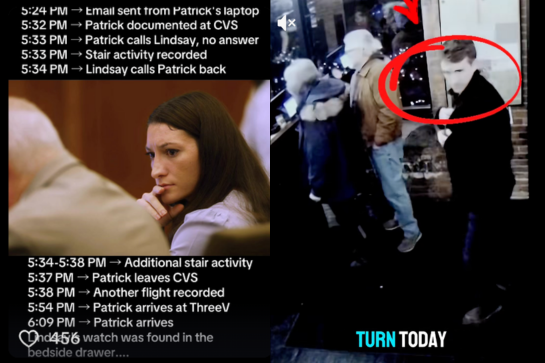
Last week I wrote about Lindsay Clancy’s postpartum psychosis. I was excited about the case because the mental health profession would be challenged. Now, after two weeks of reading transcripts and listening to testimony, I think I missed the most important thing: motive. Her husband, Patrick, was having an affair and three weeks after the killings he vacationed with his girlfriend in Costa Rica. Read more
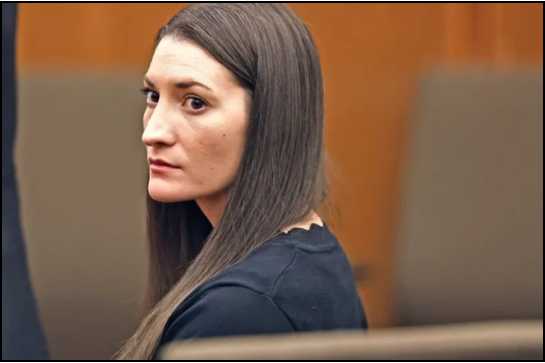
Lindsay Clancy is on trial for strangling her three children, but her lawyers are putting the mental health system on trail. Clancy had three psychiatrists prescribing medicine at the same time. She had twenty prescriptions simultaneously. One of the prescribers had never had a postpartum psychosis client. Another did not know Clancy had been diagnosed with bipolar disorder. All the prescribers could have looked at Clancy’s records and they didn’t. Read more
 Parents think an evaluation is a moment of truth: you pay an expert, the expert gives you answers. That’s not what happens. Most evaluations are designed to tell you as little as possible. Here’s how it works:
1. When a school tests your kid, that’s not really testing. Even the most high-functioning autistic kid is very, very expensive for a school district, because that kid has the right to so many extra services. Schools don’t like to spend money on one kid. So schools do the bare minimum: test for a narrow range of issues and default to “your kid is fine” unless the kid is disrupting the classroom. Read more

Two years into Z’s head injury we went to a pain clinic. The program was for families with a teenager in chronic pain, and people flew in from all over the country. Z was the only musician who couldn’t play music anymore. But there was an all-state field hockey player who hadn’t played in years but still went to every practice. There was a girl who’d been a ballerina her whole life and then suddenly couldn’t dance: she’d grown half a foot, and now her body was built for basketball. Her proprioception was off and now movement felt like violence. Read more