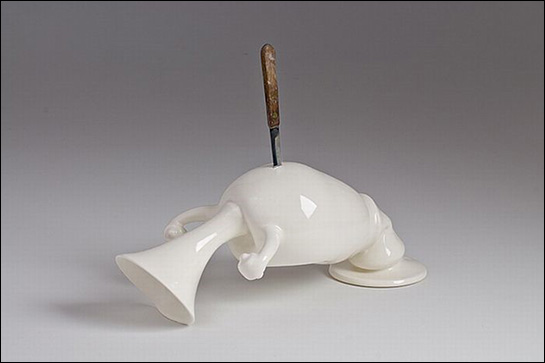
I kept this picture to remind myself that when I don’t want to get out of bed and I do anyway, I’m glad I did. The picture doesn’t inspire me, so I’m putting it here to remind us all that tricks for self-discipline that work for most people do not work for people with autism.
Luckily there are lots of ways we can make our lives easier, we just need to use different methods. Therefore: my 7-week workshop about autism! Each week, I’ll summarize research on the topic then we’ll discuss how to apply it in our own lives. In between meetings we’ll continue those discussions on a private forum, where I’ll be available to answer questions and share stories.
I know I’m getting serious about this because I have slides for each session, which I’ve never done in the past. I’m not saying that I’m going to be perfectly organized – I know my limits. But at least if you can’t make it to one of the sessions, you can watch it on video.
This is the plan for what we’ll cover:
Week 1
Autism testing is a Ponzi scheme. Schools don’t teach how to test a woman for autism so test yourself instead of going to a self-described testing expert. Scientists have created tests for autistic women to test themselves in order to sidestep the red tape of testing experts. And once you see the sidestepping process, you’ll be an unstoppable resource for friends and family.
How to get test results that matter. The autism test is unactionable – that is, there’s nothing to do with the results. Schools don’t even accept autism as a reason to give extra help. So you need to learn practical testing like how to ace an IEP, and how to talk to psychiatrists to get medicine.
Week 2
Autistic inertia is real. The autistic brain has a self-control malfunction; during early development our excessive IQ took over where our self-control would have been. Really! This means we need new solutions to succeed when a situation requires executive function, self-management, or sensory overload.
How to get out of bed. Behavioral therapy is a non-starter for us. But learning to recognize why we’re tired helps a lot. You know how the Inuit have a lot of words for snow? Autistic women have a lot of words for tired. Because we can have excitement for one thing and no energy for other things. At the same time. That’s autistic tired. And we can work around that. Even from bed.
Week 3
Epigenetic autism is the troublemaker. Having an autistic brain comes with lots of perks, and it’s fun to be smart. What makes autism truly difficult is families have been hiding it for generations. Seeing the impact our parents’ autism had on our childhood allows us to separate autistic trauma from simply having an autistic brain. Autism can flourish when autistic trauma ends.
How to make a big difference fast. We’re the first generation to have information to trace epigenetic autism, and we’re the first generation who can pass down autism in a careful way. But we have to start now, and scientists are scared to talk to us about this. So we have to talk to each other. We can change autism from being a risk factor for childhood trauma to being a family treasure.
Week 4
Camouflaging works at home not at work. Masking is ubiquitous among autistic women. But costs of camouflaging are high, and the research about how unsuccessful we are at camouflaging is surprising. So camouflaging in most places only serves to keep people from helping us, but camouflaging inside the home is essential for everyone’s emotionally stability.
How to tell what gives you away. Autistic women who are camouflaging still have rhythms and tics that are small enough that we don’t notice. But they’re large enough that at six weeks old, a scientists can tell if a baby has an autistic mother. Learning when and where to camouflage decreases stress levels measurably for not only us but the people around us.
Week 5
Female friendship has a timeline, we’re not on it. In elementary school a friend acts as a our social skills guide. In high school we have a hard time knowing who are real friends because we don’t understand reciprocity. In our 20s and 30s we fall so far behind in the ways people form friendships that by our 40s we’re in sync with only each other.
How to tell who’s a real friend. There’s a friendship scale that scientists use to measure connection. Most autistic women are so far off that scale with friendships that it almost doesn’t apply. But we can learn why the scale matters and adjust to it. And there’s a ripple effect; changing one friendship changes them all.
Week 6
Finding a theory of mind. This is a label for how much we can tell what other people know. It’s a deficit we have, but the nature of the deficit is that we don’t know we have it. So it’s one of the most difficult parts of autism to understand. But one of the biggest opportunities.
How to stop wishing people would change. Most conflict in autistic relationships comes down to theory of mind. Once we get that arguments are about blind spots, we become much more accepting of the people we love; they’re not being difficult/selfish/stupid. They just don’t see. And this is true for us, sometimes, as well. Understanding autism means living a kinder life with it.
Week 7
Autism means gifted. Labels like synesthesia, dyslexia, dysgraphia, and hyperlexia connote gifted ways of seeing, thinking and hearing. Traits like unique personal memory and perfect ear for dialogue make us built for memoir. We see see questions and answers that others don’t because we see patterns everywhere, and we see far outside social norms.
How to make sure you’re leveraging your gifts. Many of us have been using our gifts all along, but in hiding, so we never see our genius. When we understand our autistic identity we can best use our autistic gift. We can be more forgiving of ourselves by understanding we have inconsistent energy that comes in bursts. — because we are autistic geniuses even when we can’t get out of bed.
———————————
First class is March 15. Sign up now.
The sessions will be every Wednesday for seven weeks at either 2pm or 8pm Eastern (you pick). The forum will be active the whole seven weeks.
The cost is $195.
There are recordings of the sessions in case you have to miss any. But hopefully you won’t; I’m looking forward to getting to know everyone better.