Personality type posts + how autism breaks the test
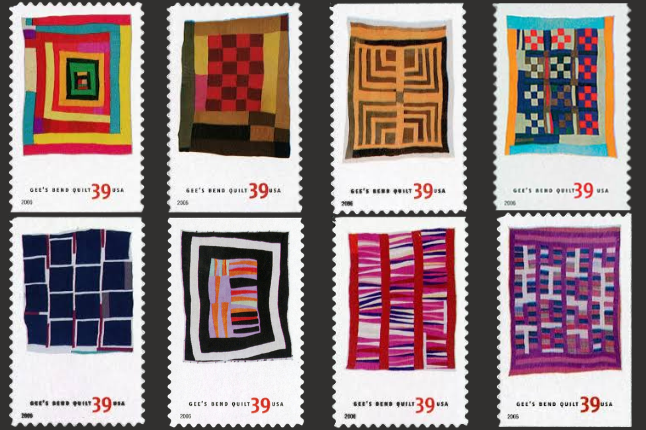
Quilts from Gees Bend
People email me their result from my personality test, and I can tell from the way they write the email that the test result is wrong. Finally, I realized that a huge percentage of the people who find their way to me are autistic, and autism breaks the Myers Briggs test. It’s like I accidentally ran a fifteen year study on autism and personality type.
The test breaks because every question assumes you can see yourself, and seeing ourselves is the thing those of us with autism can’t do. Scientists call this deficit theory of mind.
Take introvert versus extrovert. It’s not about how social you are — it’s about what exhausts you. But I never want to go to a party, and once I’m there I don’t shut up. Am I an I or an E? The official tiebreaker is whether the party recharges you or drains you, and for autistic people the answer is always drained, because people hate us at parties.
J versus P is worse. A J needs things settled; a P keeps options open. But autistic executive function means we have no consistent relationship to settledness. I’m a J about my aspirations and a P about everything that requires getting off the sofa. I want things orderly when they’re my special interest and flexible when they’re someone else’s rules.
And underneath all the letter confusion is the real problem: personality type is an exercise in relativity. The test is asking whether you’re an extrovert relative to the entire universe — not relative to your loud family, not relative to corporate America where everyone performs extroversion. Answering requires holding the whole distribution of humanity in your head and locating yourself inside it, which is precisely the theory-of-mind work autism makes hard.
Another reason autism makes typing ourselves difficult is that autism is about extremes. Normal people are okay at most things. For example, they’re okay at school and okay at sports. But autistic people are uneven: very good at some stuff and terrible at others. See: spiked brain. But also see: Gees Bend Quilts. Because those quilts are have the same architecture as more typical quilts, but they have exagerrated, uneven proportions.
The same exaggeration happens within type. If ENTPs are generally funny, cheat on their spouses, and can’t hold down a job, an autistic ENTP has been married fifteen times or has never worked a day in their life. We’re not different from our type. We’re our type with the volume knob broken off. But there’s a reason that Gees Bend quilts are on US postage stamps: the uneven composition is a surprising and beautiful and a national treasure.
So autistic people are less predictable, yes, but that’s also the reason we need need type more than anyone. This’ll be the topic of my Personality Type Office Hours on Thurs. June 18 at 8pm ET. During that session we’ll also talk about the typing method I’ve landed on after fifteen years of correcting peoples’ scores scores; those wrong scores are where I get all my best material.
New personality type posts:
INFP: Your inability to self-edit is finally worth money
INFJs confuse being understood with being loved
How to talk so an ENTJ will listen
INTJs don’t hold grudges, they archive them
ENFP: I spent two days reading about the Song Dynasty instead of writing this post.
ENFJs get sidetracked by rewards
Leave a Reply
Want to join the discussion?Feel free to contribute!