
My dad hired Penelope to coach me. Here’s what happened.
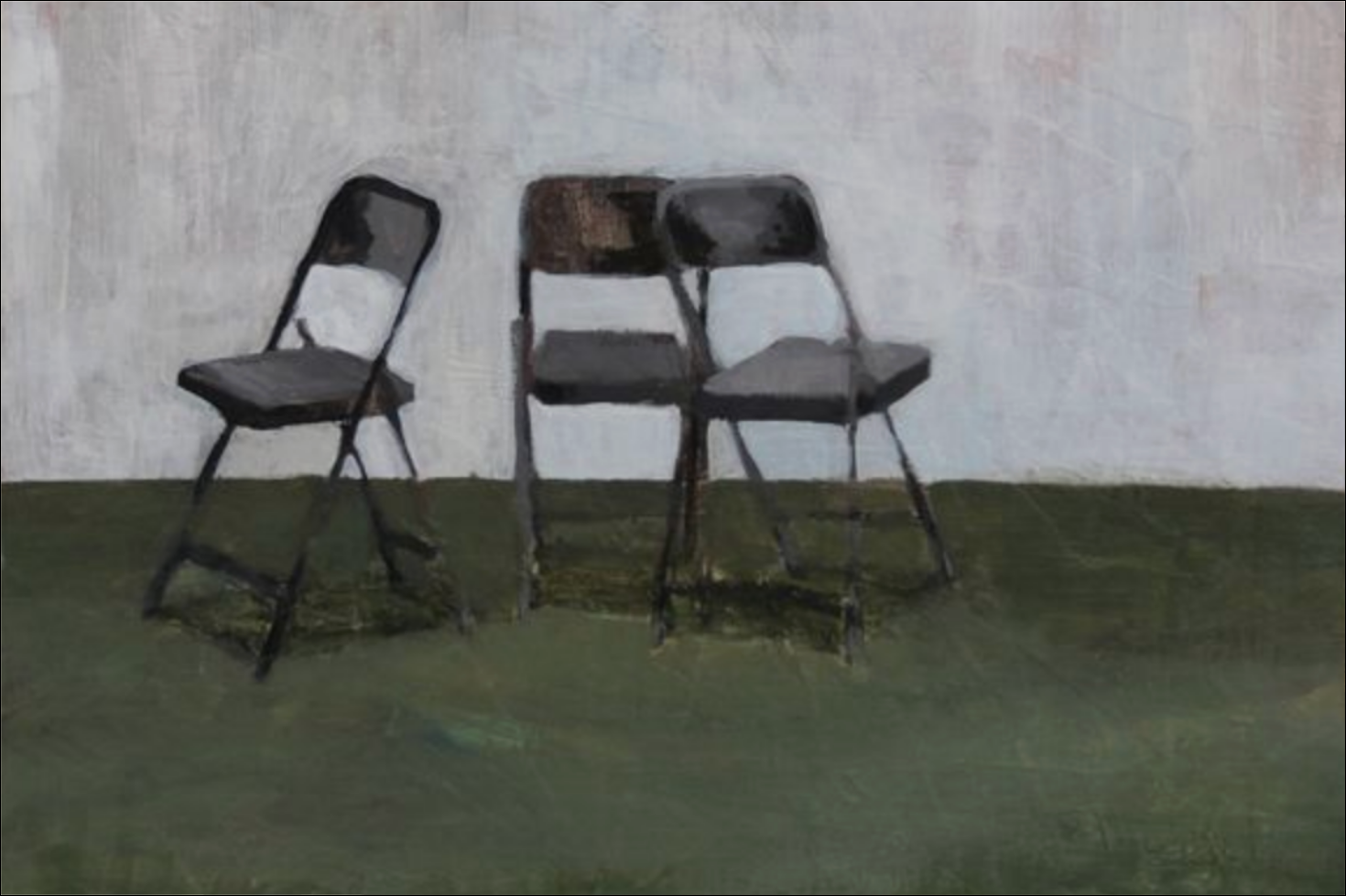
Chairs (1970) Tom Berg
This is a guest post from a college senior I coached.
When my parents divorced, my mom more or less kept my younger brother and my dad more or less kept me. We each saw the other parent, but never very much and never for very long. My brother and I only saw one another every other weekend for the better part of four years.
I didn’t think anything of the fact that my brother and I were split up. I didn’t think anything of the fact that I went to work with my dad every day, even on weekends. As far as I knew, this was just how families worked.
It wasn’t until Penelope explained autism that my family started to make sense.
From a young age I knew there was something different about the way I responded to situations compared to most people around me. “Autism” was a word that carried a lot of stigma when I was growing up, so when Penelope first suggested it explained some of my behavior, I resisted.
The idea itself wasn’t new. Autism didn’t reveal something about me that I didn’t already know. What it gave me was a vocabulary and a body of knowledge for understanding things I had sensed for years but couldn’t explain.
My dad originally sent me to work with Penelope because he wanted me to understand the workplace. She helped me do that. But she also helped me understand my dad.
I had already accepted that I was naturally weird. What I hadn’t realized was that the same explanation applied to my parents, my brother, and many of the family dynamics I had spent my life taking for granted.
Nobody had ever told me my family was unusual, probably because we didn’t socialize much as a family. Once I understood autism, though, so many things clicked into place.
As I got older, my dad and I drank almost all the time. I thought it was nice because we were watching baseball together. Looking back, I can see that we never really learned how to talk to each other. We could sit together for hours watching a game, but whenever we had to talk about something important, we fought.
Learning about autism didn’t make me blame my family less. It made me understand them better.
The relationships that changed the most were the ones with my mom and my brother.
Before, I loved them, but I didn’t put much effort into showing it. I told myself that meant the relationships weren’t very important to me. Looking back, I think something else was happening. Distance was easier than trying.
Learning that all of us were struggling with some version of the same thing made me more empathetic. For the first time, I stopped seeing myself as the only person who had been hurt by our family dynamics.
Since then, both relationships have changed a lot.
Even though I live across the country, my mom and I spend a few hours every week watching TV together remotely. I tutor my younger brother in math and English twice a week.
I used to understand our family in terms of IQ. I went with my dad because we were smart and my brother went with my mom because they weren’t.
I believed that for years.
Now I watch my brother play the drums and realize how wrong I was. Autism doesn’t distribute strengths evenly. My brother can do things I can’t do. We all have minds that spike in different places.
For a long time I thought understanding my family meant ranking everyone. Now I think understanding them means paying attention.
I know the state of my family relationships was never entirely my fault. We were all shaped by the same family system and by our own autistic ways of connecting.
But I want to take responsibility for the part I can control.
I don’t want to work weekends the way my dad did. When I have kids, I want to spend my time watching them grow up. I want to be present. I want to be a good husband and father instead of always choosing what’s emotionally easiest in the moment.
Understanding autism didn’t change me, but it changed what I think is possible for me.
Leave a Reply
Want to join the discussion?Feel free to contribute!