
Why no one interviews me anymore
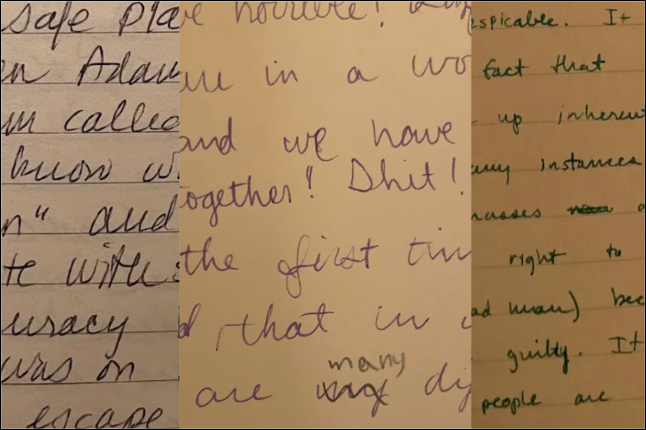
A few months ago, someone emailed asking to interview me about my writing routine. His name was Hao. He runs a publication called Famous Writing Routines. I said sure.
I’m publishing this interview because it’s the most honest thing I’ve ever accidentally said about writing. I don’t know what it felt like for Hao, but he never published it. So here it is:
Can you tell us a little about yourself?
I’ve been writing a personal blog for 20 years documenting what I’m doing: raising venture capital for three startups; tracking my son’s cello journey to Juilliard; publishing my autism research at Harvard. The blog documents sad things too. I posted about my husband beating me the night it happened. A blog reader called the police.
What does a typical writing day look like for you?
I have to work really hard each day to keep myself mentally and emotionally stable. I have dissociative identity disorder from extreme trauma when I was a child. My brain split into different people to cope. I can’t communicate by thinking at them. So I write to keep all the parts of me feeling heard.
Only one part can be in charge of the body at a time. Each person in my head has their own place where they signal when they want to take over — a specific pain in a specific location. Or I’ll get a chill I can’t shake til I switch.
What are your must-have writing tools?
I used to write half on a computer, half by hand in bound journals. I found I write differently depending on the tools. I’ve moved more than twenty times, and I carried more than fifty journals wherever I went.
I write a lot on my phone. I tried dictating instead of typing, but we would switch who was dictating midway through a piece without realizing it, which made the writing interesting but very hard to edit.
In my last move I lost half the boxes of journals. It was so upsetting that I stopped writing by hand entirely. Now I only write electronically. When I wrote by hand I could tell who was writing by the handwriting. When I type, I can’t tell.
What do you do when you hit a roadblock?
I think I just hit a roadblock. I switched in that last answer. I would never write that but I’m leaving it. The roadblock isn’t writing. It’s writing over the person who wrote that.
We’re not supposed to know what the others know, but the writing keeps everything so no one disappears.
Previous posts about DID
The first post I wrote about DID
My kid writing about having a mom with DID
Me wearing a down coat in the summer before I knew the chills were from DID
I had an aha moment while reading this. Of COURSE your writing comes from different alters. I read your blog steadily for quite a few years, and occasionally you’d write something that just pushed all my buttons. Eventually, something enraged me enough that I stopped reading for a while. In the back of my mind, I was baffled by how you could be simultaneously so engaging and enraging. I’m usually very good at clicking away from writers that I don’t like, and yet I got this weird intermittent reward from your pieces.
Now I see I was reading multiple writers, and I still am. So I pick and choose the individual blog posts now. How many writers are there? Who was interviewed by Mr. Hao? It would be fascinating to see the bylines.
I really appreciate your comment. I think other people might be insulted, but you make me feel very understood. I have some of the same questions you do about who is writing. I tell myself I’m lucky that I can write in a wide range of ways. I hope that’s true and it’s not a detractor.
Penelope
i’m glad to know this about you penelope. i’d never heard you talk about your writing this way before. i wonder why Hao didn’t publish it?
Hi, Penelope. I’ve been reading your blog on and off for the past ten years – by that I mean I check in once a year and binge all the posts, comments included. I come from a different background and your posts help me question my worldview on a number of things. They are also very entertaining.
I admit it is a relief to finally read about your struggle with DID. All these years I kept asking myself : why is she going on and on about autism when she clearly needs help for PTSD? Autism is the least of her problems. But of course you already knew. Thank you for sharing it with your readers.
You might have read Michael Pollan’s book about psychedelic therapy or watched the documentary on Netflix. If you have not, it says MDMA is about to be labeled a breakthrough therapy for veterans and trauma survivors because the drug helps you revisit your worst memories and integrate them by blunting the pain. I wonder if it might help with DID. I hope it does.
Hi, Sophie. I liked hearing how you binge-read the blog. It’s fun to hear that. Also, I appreciate how well you understand PTSD. I have been on medicine that veterans take — I took it at night so I could sleep. I think a big difference between trauma from war and trauma from early childhood is that the veterans have brains that developed as a single person. The splitting happens only if the trauma comes very very early. And unlike veterans, for me integration is not really the goal. I think about this a lot though — what I think the goal is. So i really appreciate you talking about alternative therapies.