Elizabeth Holmes and I will go to prison for the same thing. I just don’t know what it is yet.
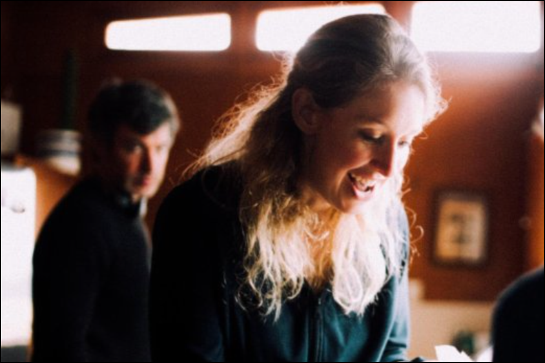
Nathan Fielder’s documentary about Elizabeth Holmes, You Can See Everything, has a scene where he plays her Who’s on First. She can’t follow it. He keeps going. She keeps smiling.
I couldn’t follow Who’s on First the first time I heard it. I watched the movie with another autistic woman who had never heard the routine, and she couldn’t follow it either. Until that scene I thought everyone needed it explained.
Elizabeth Holmes is autistic. The Department of Justice says she went to prison because she “intentionally misled investors”. I think she went to prison because nobody knows what an autistic woman looks like, and nobody told her how much lying is allowed.
Successful founders lie. Successful boards govern. Misleading investors is a startup founder’s job, which is why professional investors assume every founder’s numbers are misleading and triple-check the spreadsheet. A study of 98 founders showed they got sued about seven times a year each, mostly for fraud, and the authors say VCs don’t just tolerate faking it, they ask for it. They call it hustle.
Established VCs invested $100 million into Chief, a company that sells women a network of female executives who don’t exist. I made a fake LinkedIn profile with a fake title at a fake company and Chief invited me to apply. I published the whole pyramid scheme. The numbers were inflated and the product was a lie, and nobody went to prison. The board replaced the founders with a new CEO. That’s how startup land works. The board governs the CEO’s lies.
Holmes didn’t get investors from startup land, so her board didn’t know their job. She got retirees like Henry Kissinger and George Shultz. We call this dumb money: people who invest in startups because they want exciting friends.
She got dumb money because VCs fund people who feel familiar, and the familiar founder is autistic. Zuckerberg, Musk, Bezos, Gates. VCs systematically seek people who stand out for being very different, and that difference is autism.
VCs say they want to fund women, but they have no idea what an autistic woman looks like. Most people don’t. The personality traits of startup founders are rare in women but the traits are common in autistic women. So an autistic woman pitches, and she doesn’t look like a normal woman and she doesn’t look like an autistic man, and VCs say no.
Everything people find sinister about Holmes is what autism looks like in a woman.
Holmes smiles constantly and at the wrong moments. Autistic women learn that smiling is a social skill, and sometimes we use it so badly we look like we’re enjoying a disaster. Autistic men don’t bother, so nobody files the smile under autism.
Holmes says she doesn’t lie, and then she lies. In a famous experiment, autistic kids who had to stop a rival from getting a prize would lock the box every time, and couldn’t manage to tell the rival the box was empty. They’d do anything except plant a false belief in someone’s head.
Not that autistic people are paragons of clarity. We do say stupid things that people hear differently than we meant them, but to us that isn’t lying. That’s desperately trying to get through the moment, which we do every moment. And people judge autistic adults as more deceptive than everyone else even when we’re telling the truth. So we don’t stand a chance with a jury.
Sunny Balwani had no business on Stanford’s campus recruiting a student to be his cofounder. But an autistic woman is always looking for someone to help navigate the world; we know there’s a rulebook we don’t have, and we’re bad at judging who has it. A collaborator I thought I was close to had access to my accounts and stole the money I’d saved for my daughter’s college applications. Then the collaborator told me I was forgetting things because I’d probably had a stroke, so I went to the doctor.
The only people who have ever been trustworthy with my money are the men I’ve been in relationships with, because nobody else has a stake in me not being a mess. So Holmes trusted Balwani to know the rules of startup land, and later she handed her finances to Billy Evans, and people call that preposterous. But it actually makes sense as her best option for navigating blind spots.
In the movie, Holmes says, “Why would I do this for money? I can’t even earn any.” People hear a sociopath deflecting but I hear the truth. In 2008 I made an error on my taxes involving stock options. My accountant couldn’t fix it. The IRS offered a settlement and I said no, because I couldn’t understand how I owed tax on stock I never had. For twenty years I couldn’t keep money in a bank account, because the IRS would take it. They didn’t agree to leave me alone until this year.
Every company I started was my idea, and the man I started it with ended up owning it, because all I wanted was to be right about the idea. That’s what Holmes looks like to me. In the movie she still wants to talk about how great her idea is and how it will transform healthcare. Of course we both have financial problems.
She let Fielder’s cameras into her house, her marriage, her kids. I think she did that because she had no idea what would be good to hide. Every editor I’ve had has told me not to publish something because I’d look terrible, and I published it, because hiding felt like lying that never has an end.
Fielder looks at Holmes the way everyone looks at women with autism. The closer he gets, the less he can read her. The audience thinks that’s the discovery. Autistic women are watching a man get confused by one of us for three hours, and we love it, because this happens to us every day and nobody ever films it.
I started getting used to the idea of prison before Holmes went. Someday I’ll misunderstand something so completely that no jury will believe I didn’t understand it.
Speech Language Pathologists are loving talking about the importance of her pragmatic language deficit. For example, an SLP posted, ‘ The Who’s on First? scene really stood out to me. She seemed genuinely unable to understand the joke, even after it was explained to her. What I found even more interesting was that she didn’t seem to understand the implications of not understanding the joke.’
I’d like to see a retrial that considers her diagnosis and expert witnesses statements. It’s easy to see she’s Autistic, it’s hard to understand how she’s affected by seemingly severe pragmatic language deficits.
I love this perspective! We have an army of experts trained in communication and recognizing deficits. We should leverage this expertise in a wider range of contexts. Especially in the context of a trial. We know people with pragmatic language difficulties look like they’re lying even when they’re telling the truth. So we need experts to give autistic people a fair shot in front of a jury.
Ironic that it’s Nathan Fielder’s documentary as it’s pretty obvious he has autism though I suspect he avoids a diagnosis because he’d fail medical for his pilot’s license. Just watch his show the rehearsal. He has to practice social scenes over and over again and, in one episode, seemed unable to pass the eye expression test (can’t remember the name).
Yeah, agree he has autism. I mean, most people who will give up any semblance of a normal life in order to chase their vision have a neurodiverse brain. Typical humans place too high a value on their relationships to do something like that.