
How to be the problem in your family
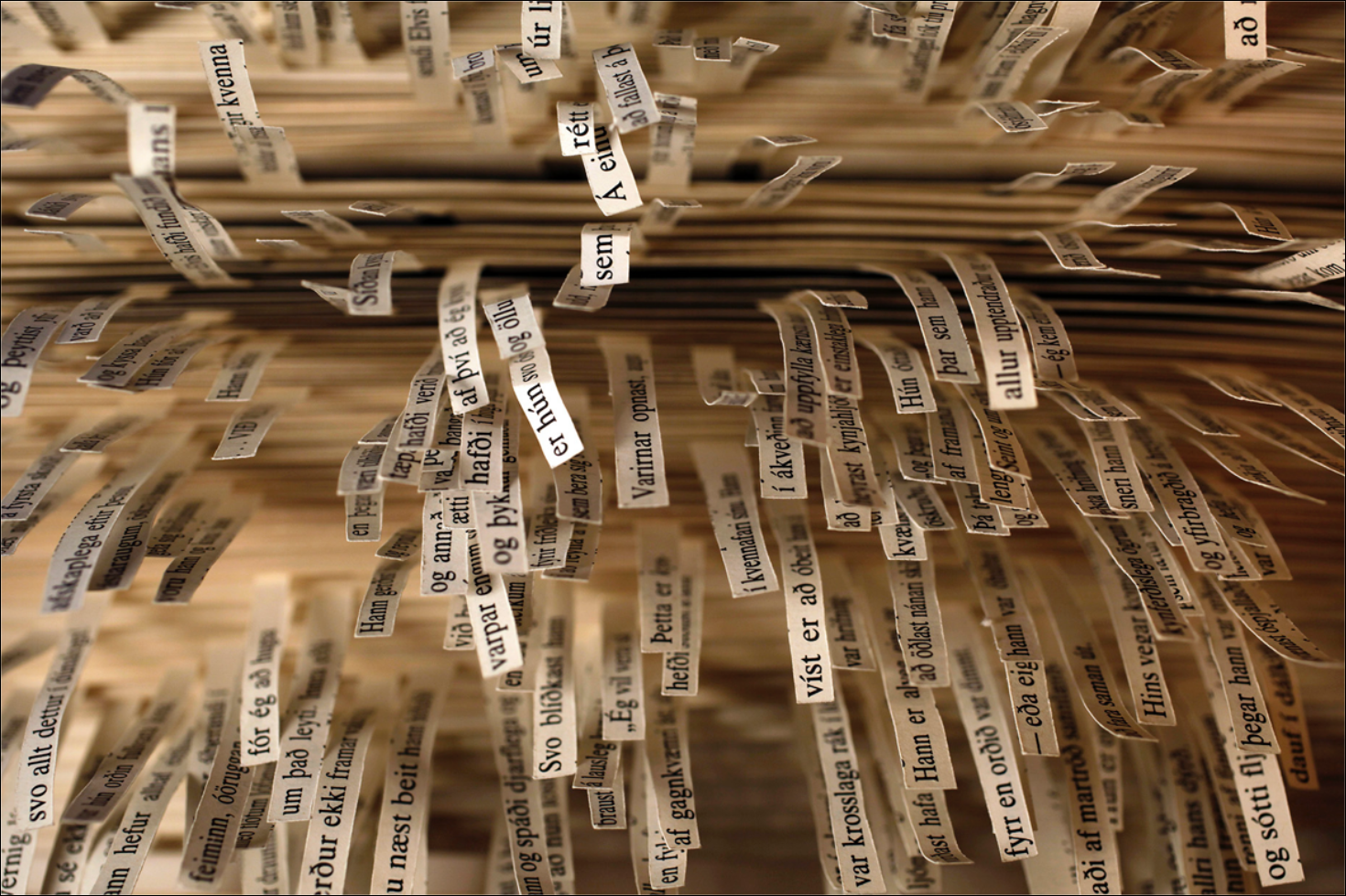
detail of Lips Open into Certain Gendered Sounds (2016) by Ragnhildur Johanns
List of things my family hates about me:
I lie.
I misconstrue conversations.
I don’t remember what I say.
I exaggerate.
I’m manipulative.
They have all told me this.
I’m reckless with people’s care.
I make everything about me.
I’m irresponsible with money.
I’m irresponsible with affection.
I’m unreliable with plans.
I manipulate my kids.
I’m verbally abusive with my brothers.
I’m emotionally abusive with my brothers.
I ask more from my dad than I give.
I pick fights with my mom.
I carry it in a backpack I’m afraid to put down. If I put it down, everything will spill out and I’ll have nothing to carry. No identity that’s mine—only whatever is left when the accusations are gone. So I keep it on. I wrap myself in the list as protection. If I say all of it first, nothing worse can be said to me.
My brother told me today that I twist his words. That I’m a master manipulator through language. That he can’t say anything to me without it being turned. He’s angry that I say my brothers tried to steal my kids.
What happened is this: I told my family we had no money for food. We were homeless, living in a hotel I couldn’t pay for. My brothers decided, together, that they would not give money while the kids were with me. One brother came to visit and wouldn’t get the kids food. I told him he couldn’t come in. Another came to Boston and said he was representing the family, but he wouldn’t give us money either.
I say they tried to steal my kids because that’s what it felt like. The kids had to choose between staying with me and getting help.
I hate that I put them in that position. But I already hated myself, so it didn’t register as new damage. It just felt consistent. Like proof that the list was accurate. Like of course this is what happens when I’m their mother.
My brother says the kids are older now. They can ask for help if they need it. I think they won’t. Not from my family. They remember not having enough food. They remember who came and didn’t help. They also know what my family thinks of me. If you grow up knowing your mother is the problem, you don’t ask her family for anything. You try to need less.
I wouldn’t want a sibling like me either. If I had a family built on secrets and shame, I would look for somewhere to put it. If one person was willing to carry it, I would let them. Who wouldn’t?
There’s no way to know if any of this is true. My family thinks I’m unreliable. That I use language to make people believe things that aren’t real. Maybe I do.
My brother took a trip to rural Japan with his wife and two toddlers. They didn’t have an international driver’s license. They didn’t have cash. They couldn’t get food.
Strangers drove them to a grocery store. The store owner drove them to a bank. Someone else took them to a café and fed them. Then picked them up after. No one knew them. They just saw two kids who needed food.
My brothers would say that was different. It was temporary. A stable family in a bad situation. And with me, it’s never temporary. I always need help and I ask and ask and ask and it doesn’t end.
Helping me is a trap. I can trap them financially. Verbally. Emotionally. If they care about me, they’re stuck. I’m covered in something that doesn’t let go. Like those sticky boards for rats. Once you step on it, you can’t get free, no matter how much you fight.
I’ve spent a lot of time with you and I’ve seen you be gentle, thoughtful, and show up for people in real ways. That’s just as true.
Some of the things you’re naming are real patterns that would be hard in any family. But that doesn’t make you a fixed version of any of those things. They’re things people can work on. They aren’t your whole identity.
I also think everyone in your family is carrying their own stuff, and that can affect how they respond to you. It doesn’t always come out as empathy or clarity. That doesn’t mean everything they say is wrong, but it also doesn’t mean all of this belongs entirely to you either.
And I do think when people aren’t willing or able to work through things with you, they miss out on the best parts of who you are. I think it’s their loss.
What a nice comment, Megan. Thank you.
What a brutally honest and vulnerable thing to write about yourself and your family-of-origin dynamic. I’m blown away by it.
The backpack image stopped me cold. The idea that the self-accusation is armor — that saying it all first means nothing worse can reach you — is one of the most psychologically precise things I’ve read in a long time. I recognized something in it.
What strikes me most is that you hold the two things at once without collapsing them into each other. The list may be true. And your brothers not feeding your children was still wrong. You don’t let yourself off the hook by pointing at them, and you don’t let them off the hook by accepting all the blame. That’s an incredibly hard thing to do, and most people can’t.
The Japan paragraph undoes me. You didn’t editorialize. You just put it there and let it sit.
I don’t know what it cost you to write this. I imagine it was considerable. I’m glad you did.
Thank you for understanding so much. You see the piece so clearly – probably more clearly than I do.
The Japan anecdote hit me because of my own experiences with Japanese culture.
When I was a tourist there, people would help me and my traveling party of white people if we so much as looked confused in a train station. One couple, who was on vacation from another city, called a cab to get us to our destination. They then called a second cab to follow us to make sure we got off at the right place.
I have a white friend who speaks fluent Japanese. When in Japan, he has to pretend to speak broken Japanese, or no one will talk to him. When they think he’s an outsider trying his best, they are just as kind and friendly as my tourist experience was. When his form of communication signifies that he is a part of their culture, they shun him.
It is easy to be kind when things are temporary. It is easy to know what role to play to feel good about yourself. With a stranger, with no shared history, you get to write and end the story all on your own terms. It is not challenging to be kind when the only cost is money.
I can see the trap your brothers fell into. They wanted the simplicity of the morality and narrative of a transaction that is acceptable to a stranger-stranger relationship. Things get much more complicated with family. Family is the only type of relationship where even a lack of contact, a lack of communication, a lack of support, still feeds into a history and a narrative of a relationship that lasts until someone dies, and often after that. They wanted a narrative where they offered help, but also felt repulsed by the way that you communicated with them. I think you are always thinking about the special nature of how familial bonds work, both positively and negatively, which causes friction when others want to find a way to help that feels more narratively cohesive, more simple.
I can see how you can be a complicated person to help, because you have developed many skills that inform what you think collaboration looks like. You see things as negotiations that other people take at face value, and your anxiety casts you so far into the future that it gets compounded when you’re waiting for people to catch up to what you can see. When it comes to family, most problems are really communication problems, and most communication problems are wounds seeking and rejecting company.
This is such a balanced, insightful and useful comment. Thank you.
Your comments on Japanese culture are so important. Many people there will feel an obligation to assist the flailing foreigners (gaijin). This does not mean that they do not also hold the gaijin in contempt, but they will cover it and express hospitality. Japanese people have no problem holding this contradiction in their minds. But if you show that you know the language, and have an understanding of the culture, then you no longer get the benefit of this cultural duality. You are expected to know better. You are held to a higher standard. That’s actually a sign of respect – you are being treated as an insider.
So much pain in your family. No matter what your roles were/are, every sibling has been damaged. You’re the scapegoat and your brothers are the golden children. And yet you’re achieving self knowledge and they probably aren’t.
Or maybe they are. My own brother eventually came around to see his part in our damaged family dynamic and we are starting to heal a little together. I’ll never fully trust him, but it’s been a bit of a bright spark here in the latter part of my life.